.png)
Every year, leading entrepreneurs from five continents who are interested in developing business connections, studying and supporting innovation, establishing new trade missions, and shaping a global business civilisation gather at GLOBAL BUSINESS WEEK — an international platform for a series of business forums and strategic corporate retreats.
.jpg)
GLOBAL BUSINESS WEEK 2026 is the world’s leading arena for business diplomacy. It is a next-generation format: a trade initiative, an entrepreneurial diplomacy platform, and a continuously operating ecosystem of international business connections, where entrepreneurs gain access not only to knowledge and networking, but also to practical tools for entering the global arena.

.png)

1. Why Davos Is a Symbolically Precise Location for GLOBAL BUSINESS WEEK 2026
Davos has long been perceived as one of the main places of global dialogue. It is a city associated with the idea of international meetings, intellectual leadership, and discussions about the future of the world economy. But GLOBAL BUSINESS WEEK 2026 adds an important emphasis to this context: while traditional global forums are often focused on major political and corporate players, GBW makes the international agenda more open to entrepreneurs, family business owners, start-ups, investors, educational leaders, and business communities from different countries.
.png)
The uniqueness of the format lies in the fact that an entrepreneur here is not a passive listener. He or she can be:
- a forum participant;
- a speaker;
- an exhibitor;
- a presenter of their business;
- a participant in negotiations;
- a potential investor;
- a participant in B2B matching;
- a representative of their country, industry, or business community;
- part of the family business programme and retreat.
This is exactly what distinguishes GLOBAL BUSINESS WEEK from many international conferences, where access to the stage, negotiations, and institutional attention is often limited to a narrow circle of major players.
.jpg)
2. GLOBAL BUSINESS WEEK as a Trade Initiative
In the modern world, trade is no longer limited to export-import contracts. Trade is trust, standards, reputation, access to markets, cultural understanding, investment readiness, legal compatibility, and the ability of entrepreneurs to reach agreements.
GLOBAL BUSINESS WEEK 2026 acts as a form of soft trade infrastructure. It does not replace government trade agreements, chambers of commerce, or export agencies, but complements them with what official diplomacy often lacks: direct entrepreneurial contact.
In practice, this means that participants can:
- present their business to an international audience;
- find partners for entering new markets;
- discuss franchising, licensing, and joint ventures;
- meet investors and business angels;
- present a start-up or innovative product;
- hold negotiations with representatives of other countries;
- understand the cultural specifics of doing business;
- build long-term connections with entrepreneurs from other jurisdictions.
The official Davos page emphasises that GBW 2026 is focused on developing B2B contacts, partnerships, international trade, national business representation, innovation, women’s leadership, and dialogue between business, society, and future generations (davos.ch).
In this sense, GLOBAL BUSINESS WEEK can be viewed as an entrepreneurial version of multilateral diplomacy: states do not negotiate on behalf of business; instead, business itself enters the international stage and creates practical channels of cooperation.
.jpg)
3. The Main Themes of 2026
Today, the world economy is simultaneously facing several challenges: the wars in Ukraine and Iran, geopolitical fragmentation, trade barriers, technological competition, energy shocks, inflationary pressure, climate risks, and the restructuring of global supply chains.
According to the IMF World Economic Outlook of April 2026, global nominal GDP at current prices is estimated at approximately USD 126.3 trillion. At the same time, the IMF forecasts global growth of 3.1% in 2026 and 3.2% in 2027, noting that the economy is once again under pressure due to conflict in the Middle East, rising commodity prices, inflation expectations, and tighter financial conditions (IMF).
The OECD Economic Outlook of March 2026 also forecasts more restrained dynamics: global growth of around 2.9% in 2026 and 3.0% in 2027, pointing to the impact of the energy shock and geopolitical risks, but also to support from technological investment (OECD).
This is precisely the environment in which business diplomacy becomes not a beautiful metaphor, but a necessary leadership skill.
.png)
4. Why the GLOBAL BUSINESS WEEK Format Is Exceptional
The uniqueness of GLOBAL BUSINESS WEEK 2026 lies in the fact that it combines several levels of international interaction within one format.
A. The First Level — Open Access to the International Stage
Many entrepreneurs have strong products, services, technologies, or educational solutions, but do not have access to global platforms. GBW creates an opportunity to reach an audience that is usually inaccessible to small and medium-sized businesses. Here, an entrepreneur can not only listen, but also speak. Not only be present, but also represent. Not only exchange business cards, but also present their company as an international player.
B. The Second Level — Forums as a Tool of Economic Navigation
The forums within GBW serve as navigation maps. They help participants understand:
which industries are growing;
where new markets are emerging;
which technologies are changing business models;
which countries are open to partnerships;
where there is investment interest;
which risks must be considered during international expansion.
C. The Third Level — Business Presentation
For an entrepreneur, presenting a business on an international platform is not just marketing. It is a test of the company’s maturity. When a business enters the global arena, it must clearly answer the following questions:
what problem does it solve;
how does it differ from competitors;
which markets are of interest to it;
what scaling model is possible;
what partners does it need;
what evidence of effectiveness already exists.
In this sense, GLOBAL BUSINESS WEEK works as an accelerator of international business readiness.
D. The Fourth Level — Matching and Negotiations
The greatest value of international forums is not the stage, but the negotiation rooms. It is there that partnerships, investments, franchises, export contracts, educational projects, joint ventures, and new markets are born. That is why matching and negotiation options are not an additional service, but the core of GBW’s trade function. In a context of global fragmentation, entrepreneurs especially need platforms where they can quickly find trusted partners through a reliable ecosystem.
E. The Fifth Level — A Permanent Platform, Not a One-Time Event
.png)
5. The World Economy in 2026: Why Entrepreneurs Need a New Diplomacy
GLOBAL BUSINESS WEEK 2026 is taking place against the background of a highly complex economic map of the world.
The Size of the World Economy
According to the IMF, global GDP at current prices in 2026 is around USD 126.3 trillion. For comparison, the World Bank shows global GDP in current US dollars for 2024 at approximately USD 111.3 trillion, which highlights the scale of nominal growth in the global economy in recent years (IMF).
This is a huge market, but access to it is distributed unevenly. Some entrepreneurs easily enter international markets through capital, connections, and institutions. Others remain local not because their products are worse, but because they lack a trusted platform for international entry. GBW partially solves precisely this problem.
Key Risks for Global Trade
In its Global Trade Outlook and Statistics, the WTO points to the risks of tariff uncertainty, rising costs, trade tensions, macroeconomic imbalances, and political uncertainty. The WTO had also previously downgraded its forecast for growth in global merchandise trade in 2026 to 0.5%, reflecting the pressure of tariffs and weak demand.
The World Economic Forum, in its Global Risks Report 2026, describes the world as being in an “age of competition”, where key short-term risks include geoeconomic confrontation, misinformation, and social polarisation; in the long term, environmental risks are gaining increasing importance (World Economic Forum).
.png)
For entrepreneurs, this means that the classic strategy of “find a client and sell” is no longer sufficient. One must be able to manage political, reputational, logistical, currency, technological, and cultural risks.
6. How Business Can Combat the Risks of Global Trade
In the conditions of 2026, entrepreneurs need not only ambition, but also systematic methods of protecting their business.
1. Market Diversification
Companies should not depend on a single market, a single supplier, or a single logistics chain. International business platforms help identify alternative directions for export, procurement, partnerships, and investment.
2. Regionalisation and Multi-Market Strategy
Globalisation is not disappearing, but it is changing its form. The WTO and partner studies on global value chains note that supply chains are being restructured through regionalisation, digitalisation, and diversification, rather than simply “collapsing” (World Trade Organization).
3. Trade Literacy
Entrepreneurs must understand the fundamentals of international contracts, Incoterms, compliance, taxation, currency risks, certification, and intellectual property protection.
4. Business Diplomacy and Cultural Competence
In many countries, trust is built before the deal. Therefore, personal meetings, reputation, participation in business communities, and negotiation skills are becoming strategic capital — especially now.
5. The Use of AI and Digital Tools
In the World Trade Report 2025, the WTO emphasises that AI can support trade, reduce administrative costs, and help small companies and developing economies, while also requiring attention to issues of transparency, fairness, and regulation.
6. Family Business Resilience
For family companies, it is especially important to connect commercial strategy with succession, a family constitution, conflict management, and the preparation of the next generation.
.png)
7. Entrepreneurs as a Key Force of the World Economy
Entrepreneurial capital is the most valuable resource on the planet. Without it, oil, gas, and gold would simply remain natural resources. Business is built on strong personalities who take responsibility and bring what they start to completion.
Today, according to the World Bank, the global population of working age — 15 to 64 years old — in 2025 was around 5.4 billion people, or approximately 65% of the world’s population. This group forms the main foundation of the global labour market, entrepreneurship, consumption, and economic activity. At the same time, if we include all categories — business founders, start-up founders, and the self-employed — the number of entrepreneurs among them is around 600 million people, or 11%. If we count only entrepreneurs who create and manage companies, their share is estimated at no more than 1–2% of the population (fred.stlouisfed.org).
The Global Entrepreneurship Monitor 2025/2026 also shows that modern entrepreneurship is becoming more conscious: 84% of early-stage entrepreneurs take social and/or environmental impact into account in business decisions, while youth entrepreneurial activity remains historically high (GEM Global Entrepreneurship Monitor). This means that entrepreneurs are not simply the vanguard of the world economy. They are a vast human layer that creates jobs, products, innovations, local ecosystems, and new forms of international cooperation. This is why GLOBAL BUSINESS WEEK addresses precisely this force and works to build a culture of entrepreneurship across different generations.
.png)
8. Family Business: The Hidden Pillar of Global GDP
GLOBAL BUSINESS WEEK has special significance for family companies. Family business is not limited to small family shops or local enterprises. It also includes large industrial groups, educational networks, agribusinesses, manufacturing companies, investment structures, brands, development companies, and international holdings. For example, around 80% of the economies of Germany and Japan — both leading technological countries — is created by family corporations.
.jpg)
According to McKinsey, family-owned businesses collectively contribute more than 70% of global GDP, generate annual revenues of around USD 60–70 trillion, and provide approximately 60% of global employment (McKinsey & Company).
This statistic changes the way we look at family entrepreneurship. Family business is not the private story of one family. It is one of the main mechanisms for developing global economic resilience.
But family companies face specific risks:
- generational conflict;
- lack of succession;
- emotional trauma within the family;
- informal governance;
- the mixing of family and corporate roles;
- fear of transferring power;
- children’s lack of preparation for responsibility;
- absence of a family constitution;
- a gap between capital and values.

9. From Forum to Retreat: Why Strong Leaders Do Not Limit Themselves to Negotiations
After three intensive days of forums, most participants stay for the strategic family business retreat. This is an important feature of GBW: the event does not end at the level of external activity — stages, presentations, deals, and networking. It moves inward: to the personality of the leader, the family, emotional resilience, values, and succession.
Each year, the retreat is dedicated to a new important theme in the development of the leader’s personality. In 2026, the theme is especially timely: “Emotional Intelligence in an Era of Turbulence.” This is not a soft psychological topic “for relaxation after the forum.” It is one of the key factors of leadership in a period of instability. When trade risks are rising, markets are changing, and uncertainty is increasing, it is not enough for an entrepreneur to have a strategy. He or she must maintain clarity of thought, resilience, the ability to negotiate, empathy, inner discipline, and the ability to manage emotions — personal, family, and team emotions.
For family business, this is especially important. In an ordinary corporation, conflict may be structural. In a family company, it is almost always emotional, financial, hereditary, and identity-related at the same time.
That is why the family business retreat after GLOBAL BUSINESS WEEK is not merely an entertaining addition to the forum; it is a laboratory of leadership maturity and development.
.jpg)
10. Why Children and Young People Are Part of This Architecture
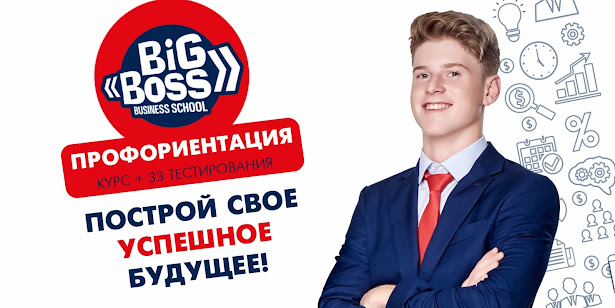
One of GBW’s strengths is the inclusion of children, teenagers, and young people through entrepreneurship camps and start-up programmes. The official GBW 2026 programme includes the Family Business Camp “POWERKIDS” for children and young people aged 6–20 in the format of MiniBoss & BigBoss Startup Camps (gbw.forum-expo.org).
.jpg)
This is fundamentally important for family business. If children are not included in the context of entrepreneurship, they inherit assets, but they do not inherit the mindset. They receive capital, but they do not always understand the source of its creation. They see the result, but they do not see the path.
GLOBAL BUSINESS WEEK offers a different approach: children and young people become part of the family’s entrepreneurial culture. They see negotiations, ideas, projects, presentations, leadership, mistakes, courage, and the international environment. This forms not merely heirs, but future creators.
.png)
Key Trends in the World Economy in 2026
1. Slower, but Not Stopped, Global Growth
The IMF and OECD forecast moderate growth in the world economy in 2026, but below pre-crisis average rates. This creates a more competitive environment in which growth will not simply be expected — it will have to be won through efficiency, innovation, and international partnerships (IMF).
2. Geoeconomic Fragmentation
The world is increasingly divided into blocs, spheres of influence, regional supply chains, and regulatory spaces. For business, this means the need for flexibility and several market-entry scenarios.
.jpg)
3. The Growing Role of AI and Technological Investment
The OECD notes that technological investment supports global economic activity despite pressure from energy and geopolitical risks (OECD).
4. The Restructuring of Trade
UNCTAD emphasises that global trade is entering 2026 under pressure from fragmentation, the digital and green transition, and tightening regulation (UN Trade and Development, UNCTAD).
5. The Growing Importance of Services
Global trade in goods is under pressure from tariffs and logistics risks, while services, digital products, education, consulting, technology, creative industries, and intellectual property are becoming an increasingly significant part of international exchange.
6. Family Business as a Factor of Resilience
Against the background of instability, family companies have the advantage of long-term thinking. But this advantage works only when there is professional governance, succession, and emotional maturity.
7. Entrepreneurship as Social Infrastructure
When large systems fail to adapt quickly enough, entrepreneurs create new solutions faster: in education, technology, logistics, healthcare, finance, sustainable development, and local communities.
.png)
One of the main deficits of the modern economy is not capital, but trust.
GLOBAL BUSINESS WEEK as a response to the crisis of trust.
There is money, but there is not always confidence in where to invest.
There are technologies, but there are not always partners for scaling.
There are markets, but there is not always a safe entry point.
There are entrepreneurs, but they do not always have international visibility.
There are ideas, but there is not always an ecosystem capable of turning them into deals.
GLOBAL BUSINESS WEEK closes this gap through the format of a trusted platform.
Its value lies not only in the fact that people meet. Its value lies in the fact that they meet in the right context: with shared entrepreneurial motivation, an international agenda, a culture of presentation, readiness for negotiations, and a desire to build long-term connections.
GLOBAL BUSINESS WEEK 2026 in Davos appears at a moment when the world needs not only politicians, regulators, and corporations. The world needs entrepreneurs who can connect countries through real projects.
In conditions where global GDP exceeds USD 126 trillion, family business creates more than 70% of global GDP, and hundreds of millions of entrepreneurs form the foundation of economic activity, the question is no longer whether entrepreneurs need global platforms. The question is which platforms are capable of giving them a voice, a stage, partners, and trust (IMF).
GLOBAL BUSINESS WEEK 2026 in Davos is not just a place where business is discussed. It is a space where entrepreneurs learn to be diplomats, families become strategic teams, and business becomes an instrument of international trust and creation.
Learn more and join GLOBAL BUSINESS WEEK: +44-744-218-77-04.